SOCKEYE SALMON FISHING ON THE KENAI & KASILOF RIVERS
If you want to fill a cooler with some of the best eating fish in the world — sockeye salmon on the Kenai Peninsula is where you want to be.
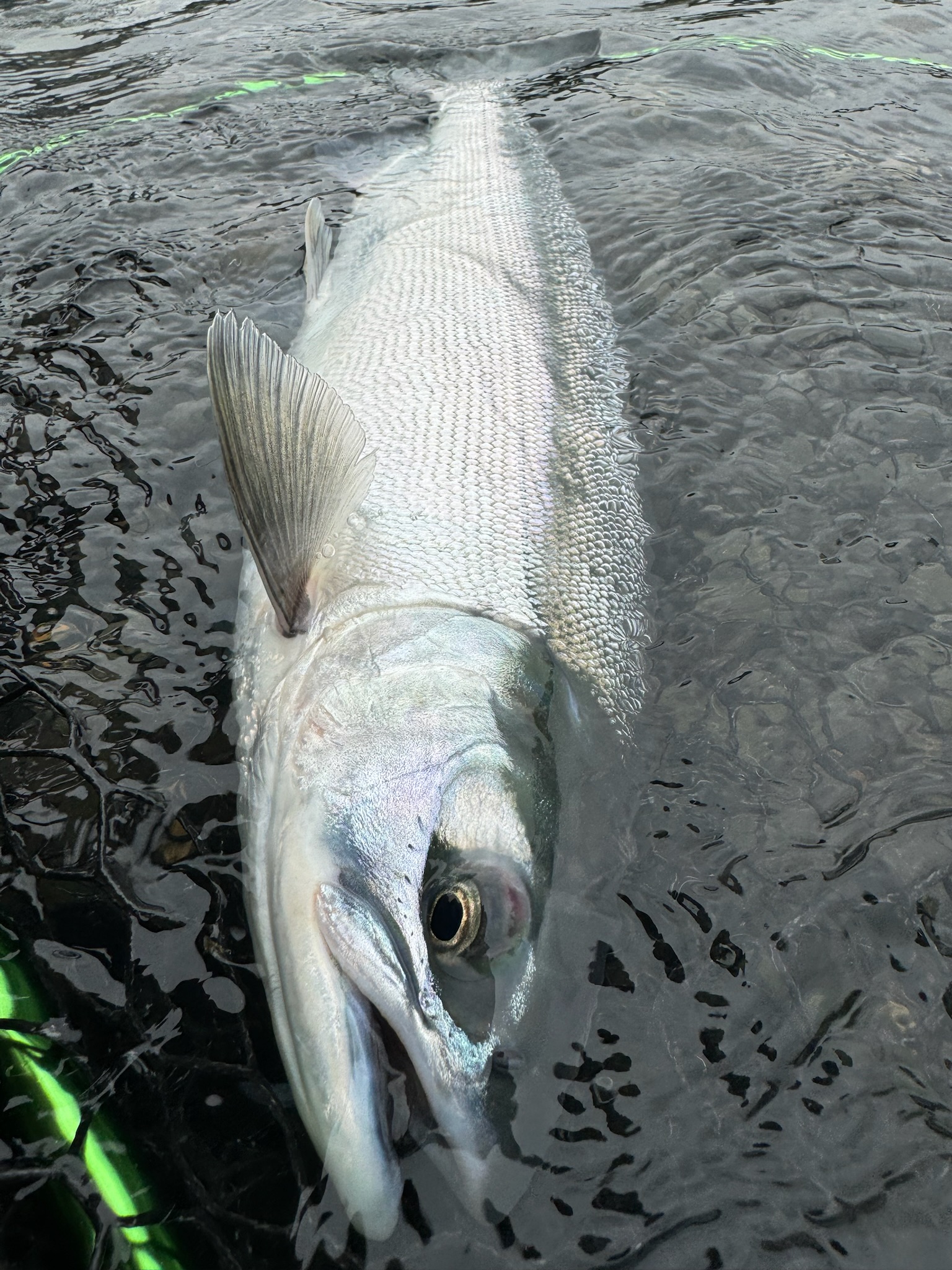
The Kenai and Kasilof Rivers run some of the most impressive sockeye salmon numbers in Alaska. At peak season in July, the fish pour through in such density that limits of six per person can happen in under an hour. Sometimes in minutes. The run is that good when it’s moving.
RiverRise Fishing Guides has been putting clients on sockeye salmon on both rivers for over 25 years. We know which sections fish during which part of the run, how to read the traveling lanes, and how to get a first-time angler into fish as fast as a seasoned veteran. Fully guided trips for all skill levels. Let’s get you on the reds.
When And Where We Fish For Sockeye Salmon
We guide sockeye trips on both the Kenai and Kasilof Rivers and adjust trip locations to match wherever the run is peaking at the time of your trip.
KASILOF RIVER SOCKEYE
The Kasilof River starts seeing sockeye salmon early to mid-June, with the peak of the run arriving as early as mid-June in strong years. From the second week of July through the first week of August you can almost always count on limits. We fish the upper Kasilof from around the second week of June through the end of August, following the fish as they push upriver.
KENAI RIVER SOCKEYE
The Kenai River sockeye run timing is similar to the Kasilof. We generally make the move to the Kenai River around the Fourth of July as the main push of fish floods in. The Kenai runs one of the most legendary sockeye fisheries in the world — fish averaging 7–12 pounds in numbers that have to be seen to be believed. Catchable fish hold in the river through the end of August. On the Kenai, fishing for sockeye often means sharing the river with the locals — the brown bears. As we float down through prime sections, it’s common to spot bears working the same banks we are, doing exactly what we’re doing. It’s one of those Alaska moments that stays with you.
PEAK WINDOW
Second week of July through first week of August is the most consistent window across both rivers. If you can only pick one week to be here for sockeye — that’s the week.
HOW WE CATCH SOCKEYE SALMON – THE FLOSSING TECHNIQUE
Fishing for Alaska sockeye salmon probably isn’t anything like what you’re used to. Sockeye don’t aggressively feed in freshwater — you can’t just cast a lure at them and wait for a bite. The technique we use is called flossing, sometimes called lining.
Here’s how it works: you stand at the edge of the river, cast your gear into the current, and let it drift through the traveling lane where the fish are moving upstream. The idea is to work the line horizontally across the fish’s path so that it drifts into their open mouth. When you pull back, the hook sets right in the corner of the jaw. It sounds unlikely until you’re into your third fish in ten minutes and starting to understand just how many fish are in that river.
Your guide sets you up, shows you the cast, and reads the lane. No experience required.
THE GEAR WE USE FOR SOCKEYE SALMON
All gear is provided. Here’s what we fish with:
Rods — 9 and 10-weight fly rods with large arbor reels. We run heavy monofilament instead of fly line — it sinks faster, handles abrasion better, and holds up to the demands of high-volume sockeye fishing far better than standard fly line.
Terminal Tackle — 40lb monofilament mainline attached to a snap swivel. Weight size is matched to river speed and depth. 3–5 foot leader with either a beaded hook or a Russian River fly.
Everything is rigged and ready when you arrive. You show up, your guide puts the rod in your hands, and you start fishing.
READY TO CATCH YOUR SOCKEYE SALMON?
Our Sockeye Salmon season runs June 16 – August 15, with peak fishing from the second week of July through the first week of August.
What’s Included…
2027 Trip Pricing…
Common Questions
It’s one of the most accessible fisheries on the peninsula. The technique is easy to learn, the fish are there in numbers during peak season, and the fast action keeps everyone engaged — including kids. We’re patient, we’re experienced with first-timers, and we genuinely enjoy putting beginners on fish.
None. Our guides provide full hands-on instruction from the moment you step into the river. If this is your first time fishing in Alaska — or your first time fishing at all — sockeye season is one of the best possible introductions.
It’s one of the best. Sockeye are prized for their deep red flesh and high oil content — exceptional smoked, grilled, or frozen for later. A limit of six fish per person adds up fast. Bring a cooler or a hard-sided shipping box if you’re planning to take fish home.
Not in the traditional sense. Sockeye don’t feed aggressively in freshwater. We use the flossing technique — a specialized presentation that works with the fish’s natural movement rather than trying to trigger a feeding response. Your guide walks you through the entire technique before you start fishing.
Sockeye runs generally peak between June and August, depending on the watershed.
Alaska’s cold, clean rivers support some of the largest sockeye runs in the world. The Kenai River specifically is one of the most storied sockeye fisheries anywhere — fish averaging 7–12 pounds in peak-season density that’s hard to find anywhere else on earth.